
What Is Oesophageal Cancer?
Oesophageal cancer occurs when cancerous cells develop in the oesophagus, the tube that carries food and liquids from the mouth to the stomach. It’s typically categorized into two main types:
- Squamous Cell Carcinoma: This type starts in the squamous cells that line the oesophagus. It is more common in the upper and middle parts of the oesophagus.
- Adenocarcinoma: This type starts in glandular cells that produce mucus and is more common in the lower part of the oesophagus, near the stomach.
Global Statistics (2022)
- Incidence: Over 511,000 new cases of oesophageal cancer were reported worldwide in 2022, making it the 11th most common cancer globally.
- Mortality: Approximately 445,000 deaths occurred due to oesophageal cancer in 2022, ranking it as the 6th leading cause of cancer-related deaths.
- High-Risk Regions: Countries with the highest age-standardized rates (ASR) of incidence include Malawi, Bangladesh, and Mongolia, indicating a significant regional burden.
Who Is at Risk?
Certain factors increase the risk of developing oesophageal cancer, including:
- Age: Most cases occur in people aged 55 and older.
- Gender: Men are more likely to develop oesophageal cancer than women.
- Tobacco use: Smoking or chewing tobacco significantly raises the risk.
- Heavy alcohol consumption: Long-term, excessive drinking can increase the likelihood of oesophageal cancer.
- Gastroesophageal reflux disease (GERD): Chronic acid reflux can damage the oesophagus and lead to a condition called Barrett’s oesophagus, which increases cancer risk.
- Obesity: Being overweight increases the risk of adenocarcinoma of the oesophagus.
- Diet: A poor diet, especially low in fruits and vegetables, may increase the risk.
- Achalasia: A rare condition that affects the ability of the oesophagus to move food into the stomach, increasing cancer risk.
- Family history: A family history of oesophageal cancer or other cancers can increase risk.
Common Symptoms
Oesophageal cancer often doesn’t cause symptoms in the early stages, which is why it may go undiagnosed until it is more advanced. Common symptoms may include:
- Difficulty swallowing (dysphagia): One of the most common early signs. Food may feel stuck in the throat or chest.
- Weight loss: Unexplained weight loss can occur as a result of difficulty eating or the cancer itself.
- Chest pain: Pain or discomfort in the chest, often related to swallowing.
- Heartburn or indigestion: Chronic heartburn that doesn't improve with over-the-counter medications.
- Hoarseness or chronic cough: This can occur if the cancer affects the vocal cords or airways.
- Vomiting: Sometimes with blood, particularly in advanced stages.
- Fatigue: Feeling unusually tired or weak without explanation.
If you experience any of these symptoms, especially if they persist or worsen, it’s important to see a healthcare provider.
How Is Oesophageal Cancer Diagnosed?
The diagnosis of oesophageal cancer typically involves a combination of the following:
- Endoscopy: A flexible tube with a camera (endoscope) is used to examine the oesophagus for abnormalities and take tissue samples (biopsy).
- Biopsy: A sample of tissue from the oesophagus is examined under a microscope to confirm cancer.
- Barium swallow: An imaging test where you swallow a contrast substance, allowing doctors to see the oesophagus and detect any abnormal growths.
- CT scan: A detailed imaging scan to assess the size and spread of the tumour.
- Endoscopic ultrasound (EUS): Combines endoscopy and ultrasound to look at the oesophagus and nearby lymph nodes to determine the cancer stage.
- PET scan: A type of imaging that can detect the spread of cancer to other parts of the body.
- Blood tests: While not diagnostic for oesophageal cancer, blood tests can help assess overall health and check for possible signs of the disease, such as low red blood cell count.
Stages of Oesophageal Cancer
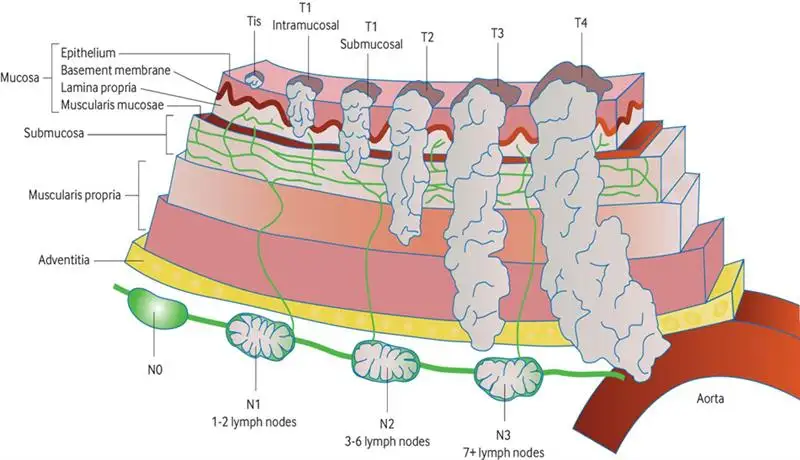
Staging helps determine the extent of cancer and guides treatment decisions:
- Stage 0: The cancer is limited to the inner lining of the oesophagus (carcinoma in situ).
- Stage I: Cancer is confined to the oesophagus and may have spread to nearby lymph nodes.
- Stage II: Cancer has spread to deeper layers of the oesophagus or nearby tissues and lymph nodes.
- Stage III: Cancer has spread to the wall of the oesophagus, lymph nodes, and possibly nearby organs.
- Stage IV: The cancer has spread to distant organs, such as the lungs, liver, or other parts of the body.
Treatment Options
Treatment depends on the stage of the cancer, the patient’s overall health, and whether the cancer is localized or has spread. Treatment options may include:
Surgery
- Esophagectomy: Removal of part or all of the oesophagus. If the whole oesophagus is removed, surgeons typically reconstruct the oesophagus using part of the stomach or intestines.
- Lymph node dissection: Removal of nearby lymph nodes to prevent the spread of cancer.
Chemotherapy
- Chemotherapy drugs are used to kill cancer cells. It may be used before surgery (neoadjuvant), after surgery (adjuvant), or as the main treatment if surgery isn’t an option.
- It may also be combined with radiation therapy.
Radiation Therapy
- High-energy rays are used to target and kill cancer cells. Radiation may be combined with chemotherapy, especially for advanced cancer or if surgery isn’t possible.
Targeted Therapy
- Targeted drugs focus on specific molecules involved in cancer cell growth. For example, drugs that target HER2 (a protein that helps cancer cells grow) can be used for certain oesophageal cancers.
- Trastuzumab (Herceptin) is one such drug that targets HER2-positive cancer cells.
Immunotherapy
- Immunotherapy helps the body’s immune system recognize and fight cancer. Drugs like nivolumab or pembrolizumab are sometimes used for advanced oesophageal cancer, especially in cases with certain genetic mutations.
- Immunotherapy is increasingly being used in combination with chemotherapy for better results.
Palliative Care
- If the cancer is too advanced for curative treatment, palliative care focuses on relieving symptoms, improving quality of life, and easing discomfort.
Living With Oesophageal Cancer
Living with oesophageal cancer can be challenging, but there are ways to manage both physically and emotionally:
- Dietary changes: After surgery or during treatment, you may need to eat softer foods or smaller meals more often.
- Nutritional support: Work with a dietitian to maintain strength and manage difficulties with swallowing or weight loss.
- Managing side effects: Chemotherapy and radiation can cause side effects like fatigue, nausea, and mouth sores. Your doctor can prescribe medications or provide strategies to manage these issues.
- Emotional support: Cancer treatment can be emotionally and mentally draining. Consider seeking support through counselling, support groups, or talking with loved ones.
Prevention
While not all cases of oesophageal cancer are preventable, there are steps you can take to reduce your risk:
- Quit smoking and avoid excessive alcohol consumption.
- Maintain a healthy weight through regular physical activity and a balanced diet rich in fruits and vegetables.
- Manage GERD: If you have chronic heartburn or acid reflux, work with your healthcare provider to manage the condition and reduce the risk of oesophageal damage.
- Regular screenings: If you have risk factors like Barrett’s oesophagus, talk to your doctor about regular screenings for early signs of oesophageal cancer.
Advances in Diagnostics
1. Confocal Laser Endomicroscopy (CLE)
CLE, also known as optical biopsy, enables real-time, microscopic examination of the oesophagus during endoscopy. This technique allows for the detection of early-stage lesions, such as high-grade dysplasia in Barrett's oesophagus, facilitating timely intervention.
2. Deep Learning-Based Imaging
Recent developments in deep learning have led to the creation of models capable of segmenting early oesophageal cancer lesions from a single endoscopic image. These models, such as the YOHO framework, achieve high accuracy, potentially improving early detection and diagnosis.
3. Sponge-on-a-String Test
A promising new diagnostic method involves a 10-minute procedure where patients swallow a dissolvable pill attached to a string. This pill releases a sponge that collects cells from the oesophagus as it is pulled back. The test aims to detect Barrett’s oesophagus , a condition that increases the risk of oesophageal cancer. The Sun+1The Guardian+1
4. Liquid Biopsy
Researchers are exploring the use of liquid biopsies—blood tests that detect tumour DNA—to identify specific mutations in oesophageal cancer. This approach could help in selecting targeted therapies and monitoring treatment response. Cancer.org
Emerging Treatments
1. Enhanced Chemotherapy Regimens
The FLOT chemotherapy regimen has demonstrated improved survival rates in patients with locally advanced oesophageal cancer compared to the CROSS regimen. Patients receiving FLOT had a median survival of 5.5 years, compared to about 3 years with CROSS. Cancer.gov
2. Immunotherapy
The combination of nivolumab and ipilimumab has been approved for patients with advanced or metastatic oesophageal squamous cell carcinoma (ESCC). Clinical trials have demonstrated improved overall survival rates with this combination therapy.
Immunotherapy Combinations:Recent studies have shown that combining immunotherapy with neoadjuvant chemoradiation can improve outcomes for patients with oesophageal squamous cell carcinoma. For instance, adding the PD-1 inhibitor sintilimab to chemoradiation achieved a pathological complete response rate of 60%, compared to 47.3% with chemoradiation alone.
3. Precision Medicine
Advancements in precision medicine are leading to the development of targeted therapies tailored to the genetic and molecular profile of individual tumours. This approach aims to enhance treatment efficacy and minimize adverse effects.
4. Personalized mRNA Vaccine
A personalized mRNA vaccine developed by Moderna and MSD is being trialled for gastro-oesophageal cancer. The vaccine is tailored to each patient's tumour to stimulate the immune system to target cancer cells. The Times.
FAQs about Oesophageal Cancer
What are the early warning signs of oesophageal cancer?
Early signs of oesophageal cancer include difficulty or pain when swallowing, unexplained weight loss, persistent heartburn or indigestion, and a chronic cough or hoarseness. Other potential symptoms can include pressure or pain in the chest or throat, loss of appetite, and persistent hiccups.
Which virus causes oesophageal cancer?
Among the above-mentioned pathogens, HPV most likely contributes to oesophageal squamous cell carcinoma (ESCC) in high-risk populations
Is oesophagus cancer hereditary?
Yes, oesophageal cancer can be hereditary, but the majority of cases are not. Several specific gene mutations and conditions, such as Howel-Evans syndrome (Tylosis), Bloom syndrome, and familial Barrett's oesophagus, increase the risk of developing oesophageal cancer.
What foods should you avoid with oesophageal cancer?
Focus on avoiding foods that are hard to swallow or might cause irritation, such as tough, dry, or fibrous meats, raw or coarse fruits and vegetables, doughy or crusty breads, and sticky or hard foods. Also, steer clear of extremely hot or acidic foods and drinks, very spicy foods, and excessive alcohol, as these can worsen symptoms or increase risk.
What is the life expectancy of someone with oesophageal cancer?
Oesophageal cancer life expectancy varies significantly by cancer stage, but for all stages combined, roughly 20% of people in the UK survive for five years or more. Early-stage diagnosis, particularly for localized cancers, offers a good prognosis with potential for permanent cure. However, the overall five-year survival rate is poor because the disease is often diagnosed at an advanced stage. Factors like age, gender, treatment response, and the specific type and stage of cancer all influence an individual's prognosis.
What is the main treatment for oesophageal cancer?
Surgery is the most common treatment if your cancer hasn't spread. Surgeons remove all or part of your oesophagus.
Where can I find a Specialist for Oesophageal Cancer?
You can search your Oesophageal Cancer Specialist on www.ioncosolutions.com