
What is Breast Cancer?
Breast is a glandular organ located on the chest. The breast is made up of connective tissue, fat, and breast tissue that contains the glands that can make milk. Also called mammary gland. Breast cancer occurs when cells in the breast tissue mutate and divide rapidly. Breast cancer is a disease in which cells in the breast mutate and grow out of control.
It generally begins in the milk-producing glands (lobular cancers), or in the ducts that carry milk from the lobules to the nipple (ductal cancers). Sometimes, it begins taking shape in the fatty and fibrous connective tissue of the breasts. See the breast anatomy in the pictures below.
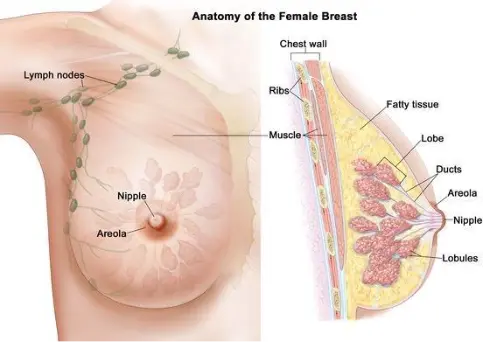
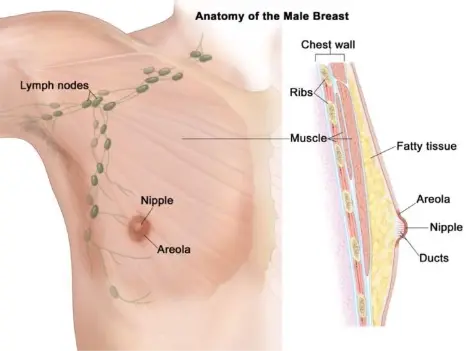
Global Breast Cancer Statistics (2022)
- New Cases: Approximately 2.3 million women were diagnosed with breast cancer, making it the most common cancer among women worldwide.
- Deaths: Around 670,000 women died from breast cancer, accounting for 6.9% of all cancer-related deaths globally (World Health Organization). But the mortality rates have declined in recent years. Better awareness, regular screening, and advanced treatment options have proved useful.
Regional Disparities
- High-Income Countries: Higher incidence rates, with survival rates around 83%.
- Low-Income Countries: Lower incidence rates but higher mortality, with survival rates below 50% due to limited access to early detection and treatment.
Projected Trends by 2050
- New Cases: Expected to increase by 38%, reaching 3.2 million new cases annually.
- Deaths: Projected to rise by 68%, resulting in 1.1 million deaths per year.
Who Can Get Breast Cancer?
- Women are most commonly affected, but men can also develop breast cancer.
- Risk increases with age, especially after 50.
- Family history, genetics (e.g., BRCA1/BRCA2 mutations), certain hormonal treatments, and lifestyle factors (alcohol use, obesity, lack of exercise) can increase risk.
Common Signs and Symptoms:
- A lump or swelling in the breast or underarm
- Change in breast shape or size
- Skin dimpling or irritation
- Nipple discharge (not breast milk), especially if bloody
- Pain in any area of the breast
- Redness or flaky skin in the nipple area or the breast
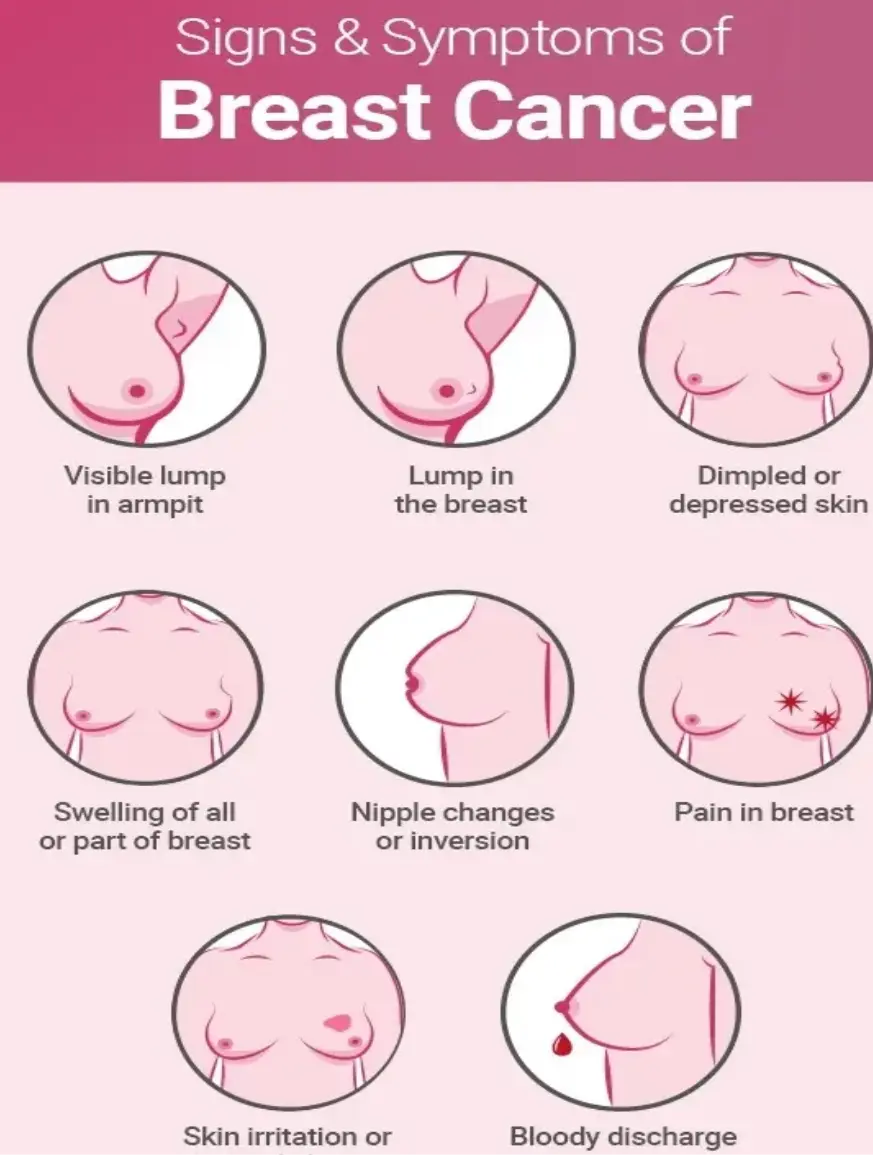
Not all lumps are cancerous, but any changes should be checked by a healthcare provider.
Detection and Screening:
Early detection saves lives. Common screening methods include:
- Mammograms - an X-ray of the breast, recommended regularly for women over 40
- Clinical breast exams
- Breast self-awareness – knowing how your breasts normally look and feel
Treatment Options:
Treatment depends on the type, stage, and individual factors. Options may include:
- Surgery (lumpectomy or mastectomy)
- Radiation therapy
- Chemotherapy
- Hormone therapy
- Targeted therapy
- Immunotherapy
Prevention and Risk Reduction:
- Maintain a healthy weight
- Stay physically active
- Limit alcohol
- Don't smoke
- Discuss family history and screening with your doctor
- Breastfeeding may lower risk
Support and Living with Breast Cancer:
A diagnosis can be life-changing, but many people live long, full lives after breast cancer. Support is available through:
- Counselling
- Support groups
- Survivor networks
- Rehabilitation and follow-up care
Advances in Breast Cancer Detection
1. Ultra-Sensitive Liquid Biopsies
Researchers at The Institute of Cancer Research in London have developed a blood test using whole genome sequencing to detect cancer-related DNA mutations. This method identified up to 1,800 mutations, offering a more sensitive approach to monitor early-stage breast cancer and detect recurrences months or even years before they appear on scans.
2. Artificial Intelligence and RNA-Based Liquid Biopsies
A new AI-driven platform combining RNA sequencing and liquid biopsy has demonstrated 90% specificity in detecting stage I breast cancer and ductal carcinoma in situ (DCIS). This technology can differentiate between low-grade DCIS and invasive cancer, potentially reducing unnecessary treatments and enabling more precise monitoring.
3. Advanced Imaging Techniques
- Molecular Breast Imaging (MBI): Utilizes gamma radiation to detect cancer cells, especially in women with dense breast tissue. MBI has shown improved sensitivity compared to traditional mammograms.
- Automated Whole-Breast Ultrasound (AWBU): An automated imaging technique that provides comprehensive volumetric data of the entire breast, aiding in the detection of abnormalities that may not be visible on standard mammograms.
Innovations in Breast Cancer Treatment
1. Capivasertib (Truqap)
Approved by the NHS in April 2025, capivasertib is a first-in-class medication used in combination with fulvestrant to treat hormone receptor-positive, HER2-negative breast cancer. It targets the PI3K pathway, a key driver of cancer cell growth, offering a new treatment option for patients with advanced disease.
2. Inavolisib (Itovebi)
In October 2024, the FDA approved inavolisib for treating PIK3CA-mutant, hormone receptor-positive, HER2-negative breast cancer. This drug selectively targets cancer cells with specific genetic mutations, providing a personalized treatment approach.
3. Immunotherapy Breakthroughs
- Pembrolizumab (Keytruda): In a global trial, this immunotherapy drug, when combined with chemotherapy, significantly improved survival rates for patients with high-risk, early triple-negative breast cancer. It has been added to the standard treatment regimen in several countries.
- Combination Therapies: A "triplet therapy" involving palbociclib, fulvestrant, and inavolisib has shown to delay disease progression in patients with hormone receptor-positive, HER2-negative breast cancer by an average of 15 months, compared to just over 7 months with standard treatments.
4. Reduced Radiation Therapy
A study by Mayo Clinic researchers found that administering a lower dose of radiation over just three sessions post-lumpectomy was as effective as traditional longer treatments. This approach reduces side effects and improves long-term cosmetic outcomes.
Emerging Therapies and Research
1. Personalized Cancer Vaccines
Researchers are developing vaccines tailored to individual tumour mutations. For instance, a vaccine targeting the α-lactalbumin protein, prevalent in triple-negative and BRCA1-mutated breast cancers, has entered clinical trials.
2. Targeting Brain Metastases
Studies have identified the RET protein as a key factor in the spread of oestrogen receptor-positive breast cancer to the brain. Inhibiting RET has shown promise in reducing tumour growth in animal models, paving the way for potential treatments for patients with brain metastases.
WHO Global Breast Cancer Initiative
Launched in 2021, the initiative aims to reduce breast cancer mortality by 2.5% per year, potentially preventing 2.5 million deaths by 2040. Key strategies include improving early detection, timely diagnosis, and access to quality treatment.
Where can I find a Specialist for Breast Cancer?
You can search your Breast Cancer Specialist on www.ioncosolutions.com
Further reading:
- Kim J, Harper A, McCormack V, Sung H, Houssami N, Morgan E, et al. Global patterns and trends in breast cancer incidence and mortality across 185 countries. Nat Med. Published online 24 February 2025.