
What Is Lung Cancer?
Lung cancer starts when abnormal cells grow out of control in the lungs, airways (bronchi) or windpipe (trachea). These cells can form tumours and interfere with the normal functioning of the lungs, including the ability to breathe. Cancer that starts in the lungs is called primary lung cancer, whereas cancer that starts somewhere else and then spreads to the lungs is called secondary lung cancer or lung metastases.
Global Lung Cancer Statistics (2022)
- New Cases: Approximately 2.5 million new cases were diagnosed, making it the most commonly diagnosed cancer worldwide.
- Deaths: Around 1.8 million people died from lung cancer, accounting for about 19% of all cancer-related deaths globally.
Age and Gender Considerations
- Age: Lung cancer predominantly affects older adults, with the majority of cases diagnosed in individuals aged 65 and above.
- Gender: While historically more common in men, the incidence in women is increasing, particularly in regions with rising smoking rates among women.
Projected Trends by 2050
- New Cases: If current trends continue, the number of new lung cancer cases is expected to rise to approximately 4.6 million annually by 2050.
- Deaths: Lung cancer deaths are projected to increase to about 3.5 million per year by 2050.
Who Gets Lung Cancer?
Smoking is the biggest risk factor—linked to ~85% of cases.
However, non-smokers can also develop lung cancer due to:
- Exposure to second-hand smoke
- Air pollution
- Radon gas
- Asbestos and other harmful substances
- Family history or certain genetic mutations
- Older age – majority of cases are diagnosed over 65yrs age
Anyone can get lung cancer, even without risk factors. Always see a doctor if you have symptoms.
Common Symptoms
Lung cancer does not always cause symptoms, especially in the early stages. But diagnosing the disease early gives the best outcomes, so see a doctor quickly if ever you notice symptoms.
Signs of lung cancer include:
- A persistent cough lasting more than three weeks
- Frequent chest infections (e.g. pneumonia)
- Breathlessness or wheezing
- Ongoing chest pain
- Fatigue and weakness
- A hoarse voice
- Blood in your phlegm or mucus
- Loss of appetite
- Unexplained weight loss
Having one or more of these symptoms doesn’t always mean you have lung cancer, as other conditions can cause them too. But lung symptoms always need to be checked by a doctor and you may still need treatment to help your symptoms, regardless of the cause.
If you're concerned about lung cancer, see your GP as soon as possible who may arrange for you to have some tests to help decide if you need to see a specialist such as a pulmonologist or search for an oncologist at ioncosolutions.com.
Types of Lung Cancer
There are two main types of lung cancer, which are diagnosed depending on the type of cell the cancer started in. It’s helpful to know which one you have, as the staging and treatment approaches differ between the two.
Non-Small Cell Lung Cancer (NSCLC) – most common (~85% of cases)
The most common type of lung cancer is non-small cell lung cancer (NSCLC), which includes two main subtypes of cancer named after the cells they affect:
- Adenocarcinoma, which starts in the gland cells that make mucus in your lungs
- Squamous cell cancer, which starts in the cells that cover the airways
Depending on the stage, NSCLC can be treated with surgery or ra diotherapy, which may be given with chemotherapy or immunotherapy.
EGFR mutation positive lung cancer is a type of lung cancer. It’s called EGFR mutation positive if every cancer cell carries a mutation in the Epidermal Growth Factor Receptor (EGFR) gene.
You’re more likely to have EGFR mutation positive lung cancer if you:
- Have adenocarcinoma
- Are a woman
- Have never smoked or are light smokers
Small Cell Lung Cancer (SCLC) – tends to grow and spread faster
Small-cell lung cancer gets its name because the cells appear much smaller when viewed under a microscope by a pathologist. It’s a less common type of lung cancer.
Small-cell lung cancer is usually not treated with surgery unless it’s found at a very early stage. Your treatment plan may combine chemotherapy, radiotherapy or immunotherapy.
How Is It Diagnosed?
If lung cancer is suspected, doctors may use:
- Sputum test – checking mucus for cancer cells
- Biopsy – removing a small sample of lung tissue
- Bronchoscopy – viewing the inside of the airways
Staging is done to see how far the cancer has spread, which guides treatment.
Stages of lung cancer
Lung cancer staging describes how far the cancer has spread, which is used to decide the best possible treatment plan.
Non-small cell lung cancer (NSCLC) has four possible stages:
- Stage-I: The cancer is small, and confined to the lungs and hasn’t spread outside the lungs
- Stage-II: Also called early-stage, when there are one or more tumours in the same lung and/or nearby lymph nodes
- Stage-III: Also called locally advanced cancer, where the cancer has spread to nearby tissues or lymph nodes
- Stage-IV: Also called advanced or metastatic, where the cancer has spread outside the lungs
It is possible to cure non-small cell lung cancer when it is stage I-III. The care of patients with stage-IV lung cancer is more focused on treating and managing the cancer.
There are only two stages to describe Small-Cell Lung Cancer (SCLC):
- Limited Stage: cancer is only in one lung, may have spread to nearby lymph nodes and can be treated with radiotherapy.
- Extensive Stage: cancer is in both lungs and may have spread to far away lymph nodes or other organs
Limited Stage small cell lung cancer can be cured in some patients. The care of patients with Extensive Stage small cell lung cancer is more focused on treating and managing the cancer.
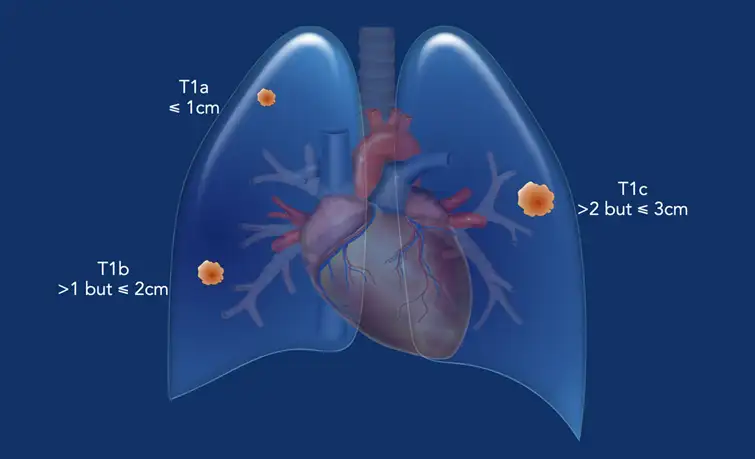
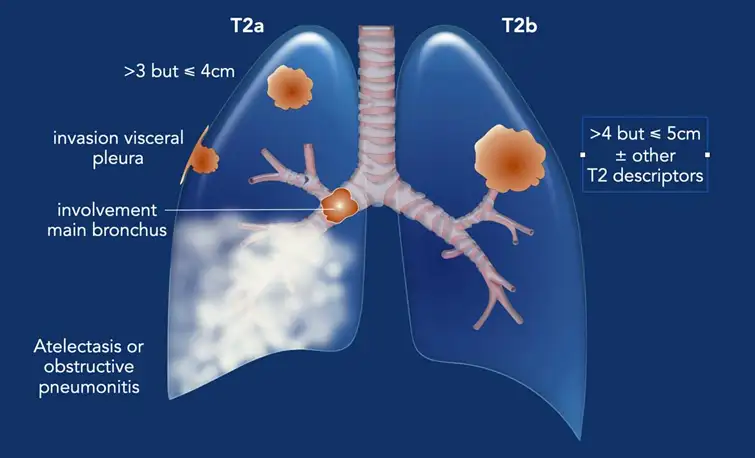
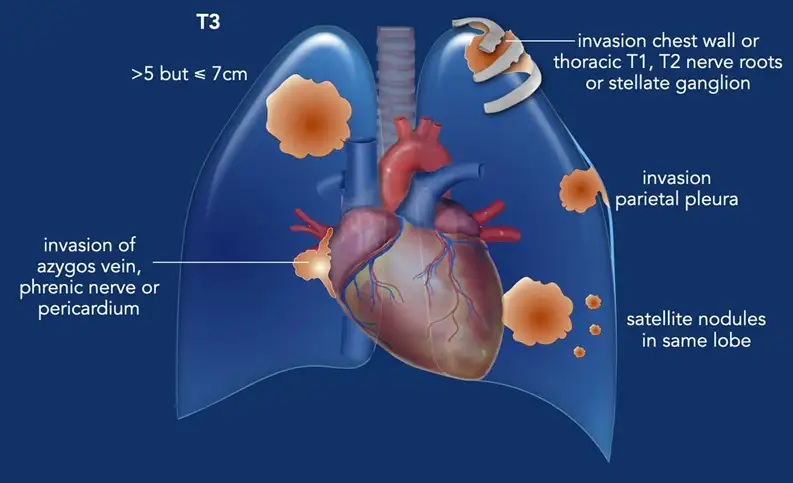
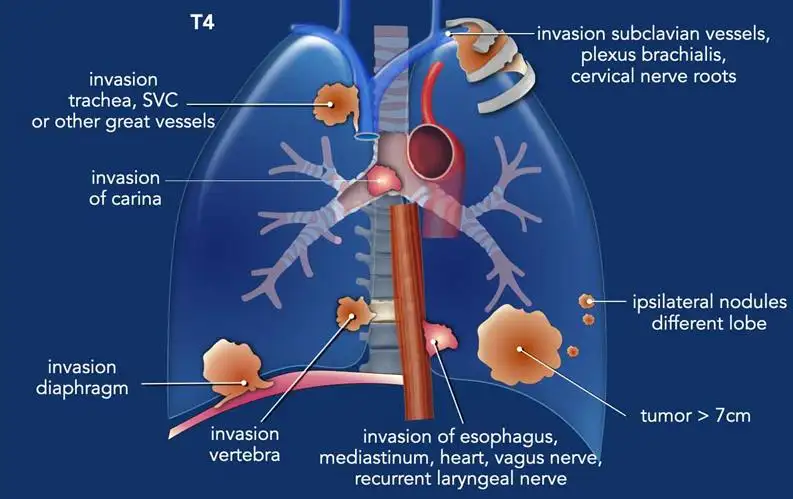
Staging for NSCLC: Adapted from TNM Classification- 9th edition – 2025.
T-Staging
Lymph Nodal Staging
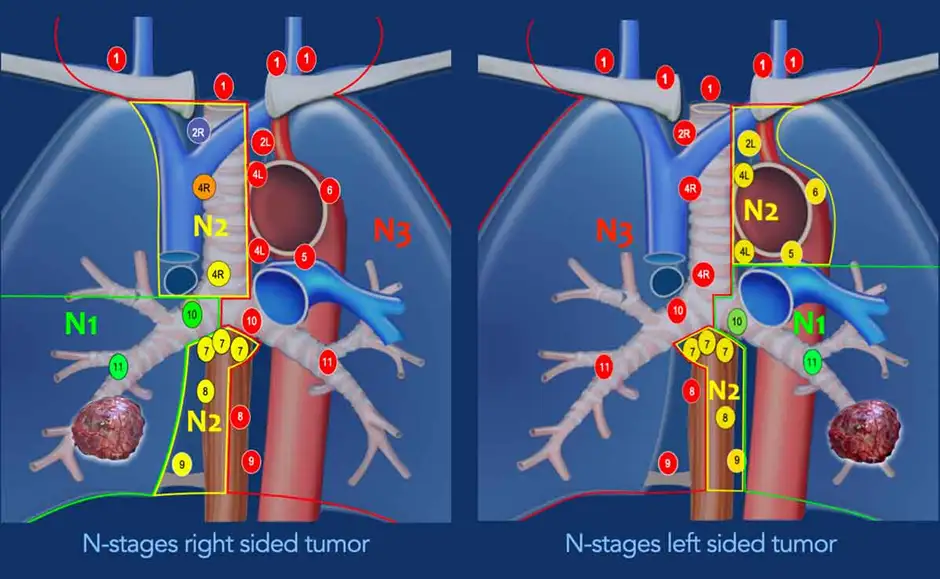
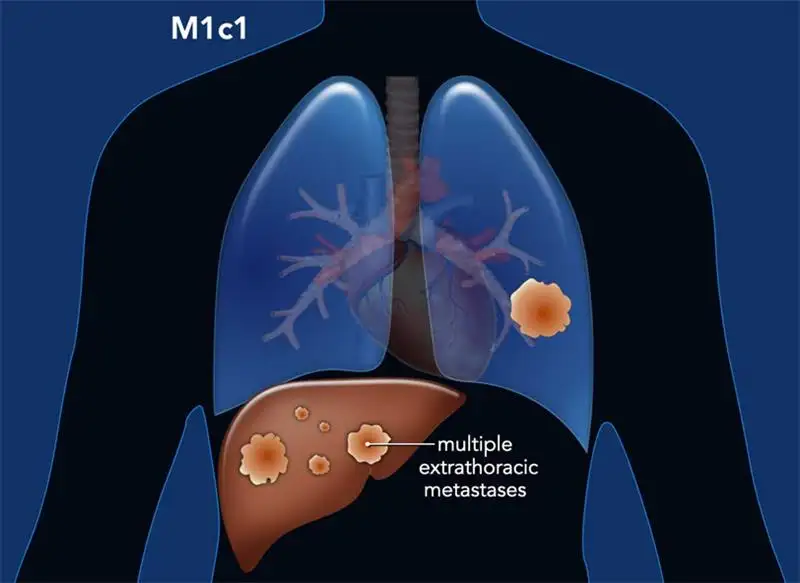
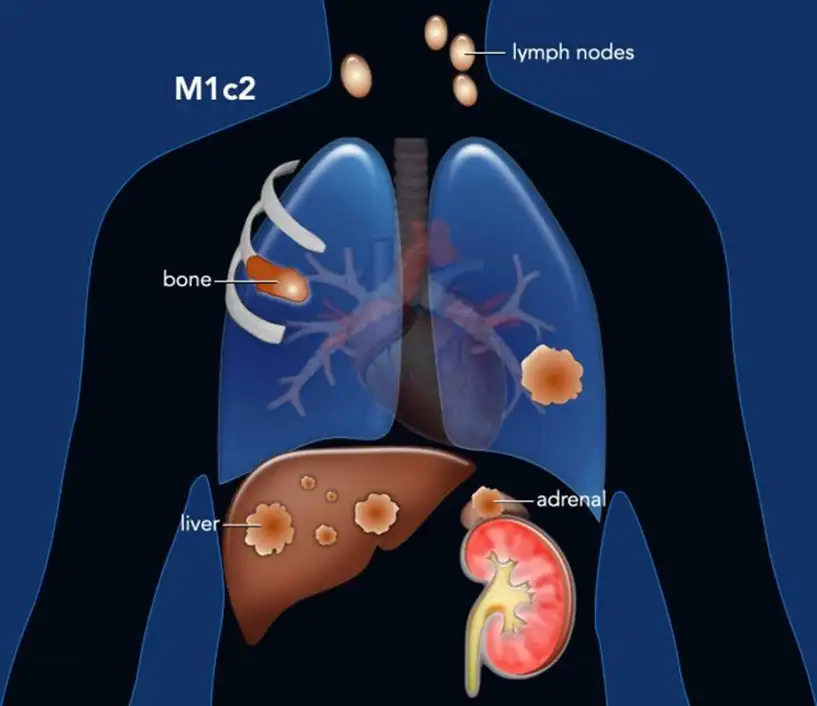
Metastatic M Staging
Treatment Options
Treatment depends on the type, stage, and patient’s overall health. Options may include:
- Surgery – to remove part or all of the lung
- Radiation therapy – to kill cancer cells with high-energy x-rays
- Chemotherapy – drugs that kill fast-growing cells
- Targeted therapy – drugs that block specific cancer cell signals
- Immunotherapy – helps the immune system fight cancer
Treatment usually combines two or more types of therapy for best results, which depend on the stage and type of cancer.
- Surgery: Mainly used for early-stage NSCLC (stage I-III), surgery aims to remove as much disease as possible and is often the first step for treating early or locally advanced lung cancer.
- Radiotherapy: A non-invasive treatment that uses high doses of radiation to kill cancer cells, radiotherapy can be a curative treatment in patients with early-stage NSCLC (stage I-III) and limited stage small-cell lung cancer. Stereotactic ablative radiotherapy (SABR) can be used as a curative treatment for patients with very early-stage NSCLC (stage I-II) or as a way of controlling the cancer or helping with symptoms in patients with more advanced cancer (stage 4).
- Chemotherapy: This may be given before, during or after surgery or radiotherapy to increase the chances of curing the cancer. For people with advanced NSCLC (stage IV) this may be their mainstay treatment for their lung cancer but may also be given in combination with immunotherapy or targeted therapy. This treatment is usually given as an infusion through a vein.
- Immunotherapy: There are immunotherapies available for lung cancer, which aim to increase the immune system’s natural response to cancer cells to help destroy them. This may be recommended before surgery, after surgery, following radiotherapy or as a treatment for patients with advanced NSCLC (stage IV). Sometimes immunotherapy is given in combination with chemotherapy. This treatment is usually given as an infusion through a vein.
- Targeted Therapy: Targeted drug therapies, often given in tablet form are given to patients who have a cancer that contain specific mutations in certain genes. EGFR mutation positive lung cancer is the most common type of cancer treated with a targeted drug therapy but there are many others rarer types.
Living With Lung Cancer
- Stay informed and ask your doctor questions
- Maintain a balanced diet and gentle physical activity
- Manage symptoms and treatment side effects
- Seek emotional support—counselling, support groups, or spiritual care
- Palliative care can help improve comfort at any stage
Follow-Up and Monitoring
After treatment, regular check-ups are important to monitor recovery and detect any signs of recurrence early.
Prevention and Early Detection
- Smoking Cessation: Quitting smoking at any age can significantly reduce the risk of developing lung cancer.
- Screening: Low-dose computed tomography (LDCT) screening is recommended for high-risk individuals, such as long-term smokers aged 50-80yrs.
- Environmental Factors: Reducing exposure to air pollution, second-hand smoke, and occupational hazards can lower the risk.
Advances in Lung Cancer Detection
1. Artificial Intelligence (AI) in Early Detection
AI is increasingly utilized to enhance the accuracy of lung cancer screening. For instance, a 63-year-old woman in Georgia underwent a preventive CT scan that revealed a small lung lesion. AI software assessed the lesion's likelihood of being cancerous, prompting further testing and leading to the early detection of stage 1B lung cancer. This early intervention allowed for a lobectomy without the need for chemotherapy or radiation, highlighting AI's potential in saving lives through early detection.
2. Electromagnetic Navigation Bronchoscopy (ENB)
ENB is a minimally invasive procedure that uses electromagnetic technology to guide physicians to peripheral lung lesions. By creating a 3D map from CT scans, ENB enables precise biopsy and staging of lung cancers, improving diagnostic accuracy and patient outcomes.
3. Liquid Biopsy
Liquid biopsy is an emerging non-invasive method for detecting lung cancer by analysing biomarkers such as circulating tumour DNA (ctDNA) in blood samples. This approach offers a promising alternative to traditional tissue biopsies, facilitating early detection and monitoring of treatment responses.
Breakthroughs in Lung Cancer Treatment
1. Chemotherapy-Free Treatment for EGFR Mutations
Johnson & Johnson received FDA approval for a combination therapy, Rybrevant and Lazcluze, as the first chemotherapy-free treatment for non-small cell lung cancer (NSCLC) patients with specific EGFR mutations. This combination has shown a 30% reduction in disease progression or death compared to the current standard treatment, offering a more targeted and less toxic option for patients. New York Post+2MarketWatch+2Wikipedia+2
2. Amivantamab and Lazertinib Combination
A new drug combination, amivantamab and lazertinib, has demonstrated a 40% increase in effectiveness over the standard treatment for advanced NSCLC. In clinical trials, this combination extended progression-free survival by an average of 23.7 months, significantly improving patient outcomes. New York Post
3. Sugemalimab Approval
Sugemalimab, an anti-PD-L1 monoclonal antibody, was approved for use in combination with chemotherapy for the first-line treatment of metastatic NSCLC without certain genetic mutations. This approval provides an additional immunotherapy option for patients, enhancing the arsenal of treatments available for lung cancer. Wikipedia
4. Ensartinib for ALK-Positive NSCLC
Ensartinib, an ALK inhibitor, was approved for the treatment of ALK-positive locally advanced or metastatic NSCLC. This oral medication offers a new targeted therapy for patients with specific genetic alterations, providing a more personalized treatment approach. MarketWatch+2Wikipedia+2Wikipedia+2
5. Repotrectinib for ROS1-Positive NSCLC
Repotrectinib, a tyrosine kinase inhibitor, was approved for ROS1-positive NSCLC. This treatment targets a specific genetic mutation, offering a tailored therapy option for patients with this rare alteration. WikipediaWikipedia
6. Zenocutuzumab for HER2/HER3 Fusions
Zenocutuzumab, a bispecific antibody targeting HER2 and HER3, was approved for the treatment of NSCLC and pancreatic cancer with neuregulin 1 gene fusions. This first-in-class medication provides a new treatment avenue for patients with this specific genetic profile. Wikipedia
Personalized Medicine and Organ-on-a-Chip Technology
Researchers at King's College London and GSK are developing lab-grown miniature tumour replicas, or "organoids," derived from patients' tumours. These organoids replicate the unique genetic mutations of each individual's cancer, allowing for the testing of various treatments to predict relapses and identify effective therapies. In future this approach aims to personalize treatment plans and improve patient outcomes. The Times
These advancements signify a transformative period in lung cancer care, emphasizing early detection, personalized treatment, and innovative technologies.
FAQs about lung cancer
Can vaping cause lung cancer?
Vapes are an alternative to cigarettes, but whether they carry a risk of cancer is still unclear. They’re a relatively new product and more long-term studies are needed to understand how vaping affects your risk of lung cancer.
However, what we know already is that many vapes contain chemicals known to cause cancer, including:
- Benzene
- Heavy metals
- Volatile organic compounds
Long-term studies will reveal whether vaping has a lower risk of lung cancer compared to smoking. Vaping may increase your risk of lung cancer compared to not vaping or smoking at all. However, vaping can be a helpful way to support people as they quit smoking.
Does a chest x-ray show lung cancer?
- If you’re having symptoms of lung cancer, a chest X-ray is usually the first step to investigating the cause. A chest X-ray creates images inside your lungs and can show abnormal structures or masses.
- It’s not possible to tell from an X-ray whether a growth is caused by lung cancer or something else, like a lung abscess. If something unusual shows up on your chest X-ray, a biopsy is needed to find out if it’s lung cancer.
- The UK has launched a free lung cancer screening program called the ‘Lung Health Check’ (LHC). Most people over the age of 55 who have previously smoked or who are current smokers are eligible. In this programme a low dose CT scan of the chest is performed. Please contact your GP for more information.
At what stage is lung cancer curable?
Lung cancer has better outcomes when it’s diagnosed at stage 1, which is when it’s only in one lung and hasn’t spread to distant parts of the body.
The majority of patients diagnosed with stage 1 lung cancer will live for 5 years or more after their diagnosis.
There are treatments available for lung cancer at all stages, which range from intensive treatments to palliative care.
-
Where does lung cancer usually spread first?
Lung cancer that has spread outside the lungs is called stage 4 lung cancer, advanced lung cancer, or metastatic lung cancer.
The most common places for lung cancer to spread are:
- Lymph nodes
- Other parts of the lung or the other lung
- The brain
- The bones
- The liver
- The adrenal glands
Where can I find a Specialist for Lung Cancer?
You can search your Lung Cancer Specialist on www.ioncosolutions.com