
What Is Bowel (Colorectal) Cancer?
Bowel cancer is a type of cancer that begins in the large bowel , which includes the colon and rectum . It usually starts as small growths called polyps , which can become cancerous over time if not removed.
It is one of the most common cancers worldwide—but highly treatable when caught early.
Global Bowel Cancer Statistics
- In 2020, bowel cancer, also known as colorectal cancer (CRC), resulted in over 1.9 million new cases and 930,000 deaths globally, making it the fourth most common cancer worldwide. The World Health Organization (WHO) projects that the number of new cases could rise to 3.2 million and deaths to 1.6 million by 2040.
- Rising Incidence in Younger Adults: Recent studies indicate a concerning global increase in bowel cancer rates among individuals under the age of 50yrs. This trend is observed in both high-income countries and emerging economies, often correlating with lifestyle changes such as diet and physical activity. Notably, women in certain regions, including the UK, are experiencing a faster rise compared to men.
- Early-Onset Bowel Cancer: : In 14 high-income countries, bowel cancer rates have increased in individuals aged 25–49, while stabilizing in older age groups. This shift may be linked to screening and changes in diagnostic practices and underscores the need for targeted prevention strategies.
Who Is at Risk?
- Age: Most cases occur in people over 50.
- Family history : Having close relatives with bowel cancer increases risk.
- Diet: High in red or processed meats and low in fibre.
- Lifestyle: Lack of exercise, obesity, smoking, and heavy alcohol use
- Medical conditions: Inflammatory bowel diseases like Crohn’s or ulcerative colitis; Type 2 diabetes
- Genetics: Inherited conditions like Lynch syndrome or familial adenomatous polyposis (FAP)
Common Symptoms
Changes in bowel habits (e.g., diarrhoea, constipation).
Blood in stool or rectal bleeding.
Abdominal pain, bloating, or cramping or lump
Feeling like the bowel doesn't empty completely
- Unexplained weight loss
Fatigue or weakness due to anaemia
Losing your appetite
Note: Early bowel cancer may have no symptoms—screening is essential.
How Is It Diagnosed?
Stool tests: (e.g., FIT or FOBT) to detect hidden blood
Colonoscopy: : A camera inspects the bowel and can remove polyps
Flexible sigmoidoscopy: Examines the lower part of the colon
CT or MRI scans for staging and detecting spread
Bowel cancer screening
Bowel screening checks for signs of bowel cancer when there are no symptoms. This can help find cancer earlier. If you’re between 60 to 74 years old, the NHS offers bowel cancer test kits for screening every two years. However, if you have symptoms you should speak to your GP or contact us, no matter your age.
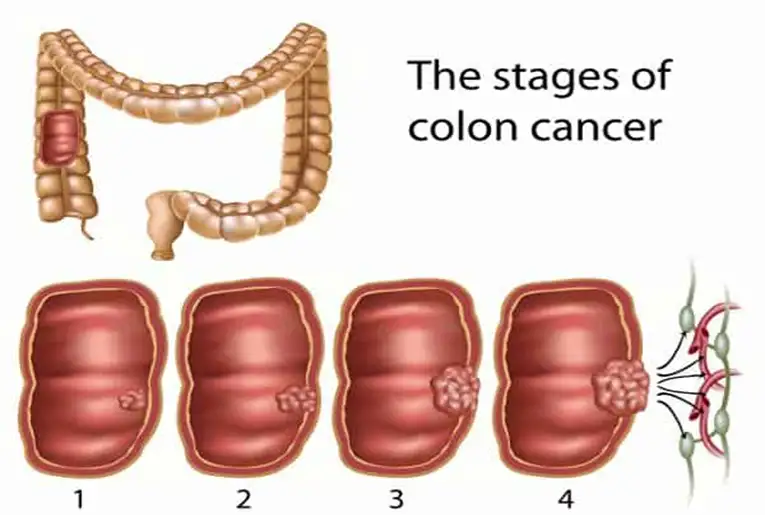
Stages of Stomach Cancer
Stage 0: Abnormal cells in the innermost layer.
Stage I-II: Grown into layers of bowel wall
Stage III: Spread to nearby lymph nodes
Stage IV: Spread to other organs (e.g., liver, lungs)
Staging helps guide treatment choices.
Treatment Options
Treatment depends on the stage and location of the cancer:
Surgery
- Removes the cancerous section of the bowel or all of the large bowel
- Sometimes includes removal of lymph nodes
Chemotherapy
- Uses drugs to kill cancer cells
- Often given before (neoadjuvant) or after (adjuvant) surgery
Radiation Therapy
- Mainly used for rectal cancer to shrink tumours before surgery
MRIdian radiotherapy - advanced radiotherapy that can be used to eradicate secondary tumours
Targeted Therapy
- Drugs that target specific cancer cell mechanisms
- Used especially in advanced cases with genetic mutations
Immunotherapy
- Boosts the body’s immune system to fight cancer
- Effective for certain genetic types like MSI-H or dMMR tumours
Screening and Prevention
- Routine screening recommended from age 45–50 (varies by country)
- Early removal of polyps can prevent cancer
- Healthy lifestyle: high-fibre diet, limit red meat, stay active
Living With Bowel Cancer
- Side effects may include fatigue, digestive issues, or ostomy adjustments
- Emotional support and counselling are valuable
- Many people live long, healthy lives after successful treatment
Prevention and Early Detection
- Treat H. pylori infection early.
- Healthy diet: Low in salt/pickled foods; rich in fruits and vegetables.
- Avoid smoking and excessive alcohol.
- Screening: In high-risk countries (like Japan and South Korea).
Recent Investigations and Treatment Innovations
Artificial Intelligence (AI) in Diagnosis: Harvard’s AI model “Chief” has shown up to 94% accuracy in detecting cancers via tissue image analysis.
Immunotherapy Breakthroughs
Dostarlimab for MSI-H Tumours: A groundbreaking study at Memorial Sloan Kettering Cancer Centre demonstrated that the immunotherapy drug dostarlimab led to a 100% remission rate in rectal cancer patients with mismatch repair deficiency (MMRd). This approach, which involves blocking checkpoint proteins to enhance the immune system's ability to attack cancer cells, is now being explored for other cancers, including colon and endometrial cancers.
Faecal Microbiota Transplantation (FMT): An experimental trial in the U.S. combined PD-1 inhibitor immunotherapy with FMT from a cancer survivor. Remarkably, one patient achieved complete remission after previously unresponsive chemotherapy. This innovative approach suggests that gut microbiota may play a crucial role in cancer treatment efficacy.
Nanoparticle-Based Drug Delivery
Mesoporous Silica Nanoparticles (MSNs): Researchers are developing MSN-based drug delivery systems that can target colorectal cancer cells more precisely. These systems utilize functionalization strategies to improve drug stability and release, aiming to enhance therapeutic outcomes while minimizing side effects.
Advancements in Surgical Techniques
Robot-Assisted Laser Tissue Soldering (RLTS): A novel semi-automated RLTS system has been tested in vivo on porcine models. This technique aims to improve bowel incision closure during surgery, potentially reducing complications and enhancing recovery times. arXiv
Full-Workflow Automation in Radiotherapy
AI-Powered Radiotherapy : An innovative "All-in-One" radiotherapy workflow has been implemented for rectal cancer treatment. This system automates the entire process, from simulation to beam delivery, significantly reducing treatment preparation time and improving patient experience.
FAQs about Bowel Cancer
Is Bowel cancer Hereditary?
If you notice blood in your stool, you should always be checked by a doctor, as it can be a sign of bowel cancer.
But often, it can be caused by something benign, such as:
- Piles (haemorrhoids)
- Stomach ulcers
- Infections, like a stomach bug or STI
- Injury or fistula
- Blood-thinning medicines like warfarin
- Inflammatory bowel diseases
Never try to self-diagnose. It's always better to get medical advice. Speak to your GP or book an appointment as soon as possible.
Is Bowel cancer Hereditary?
As many as 1 in 10 cases of bowel cancer are thought to be genetic. However, these genes are usually not passed down through families.
Although having a family member with bowel cancer increases your risk of bowel cancer, hereditary bowel cancer is rare.
Hereditary bowel cancer includes Lynch syndrome, Familial Adenomatous Polyposis and MUTYH-associated polyposis. These are caused by changes to a specific gene or genes that give a much higher risk of bowel cancer.
What is the life expectancy of someone with bowel cancer?
Life expectancy for bowel cancer varies significantly, but in England, around 60% of people survive for 5 years or more and 55% survive for 10 years or more, with rates dramatically improving with early diagnosis and localized disease (91% 5-year survival for localized) compared to advanced, metastatic cancer (13-15% 5-year survival). Factors like the cancer's stage, the patient's age, and the chosen treatment greatly influence an individual's prognosis.
How long can you have bowel cancer without knowing?
You can have bowel cancer for several years without knowing it, as the progression from a pre-cancerous polyp to a malignant tumor can take 5 to 15 years, and early stages often show no symptoms. Bowel cancer is often slow-growing, leading to asymptomatic periods where it can grow, spread, and cause damage before any noticeable signs appear.
What foods should I avoid after bowel cancer?
Cut back on foods that increase the amount of poo you pass, such as fruit, vegetables, fried foods, fruit juice, caffeine and alcohol. Thicken the output by eating bread, rice, potatoes, pasta, oats, smooth nut butter, bananas and crackers.
How to stop bowel cancer from returning?
There's no certain way to stop cancer from recurring. However, there are steps that are thought to reduce colorectal cancer risk specifically. The first is maintaining a healthy weight. There's increasing evidence that being overweight increases the risk of colorectal cancer recurrence.
Where can I find a Specialist for Bowel Cancer?
You can search your Bowel Cancer Specialist on www.ioncosolutions.com